Further vs Farther What’s All The Fuss About?
Buckle up; things are about to get slightly confusing before they are clarified. Here, we have two words, further vs farther or furthest vs farthest, that sound somewhat similar, have similar spellings, & also have strikingly resembling meanings. Of course, there is a high probability that people will use them interchangeably. This is precisely what happened in the case of the abovementioned words: Further Vs Farther. They have been erroneously used throughout history due to the similarity they bear.
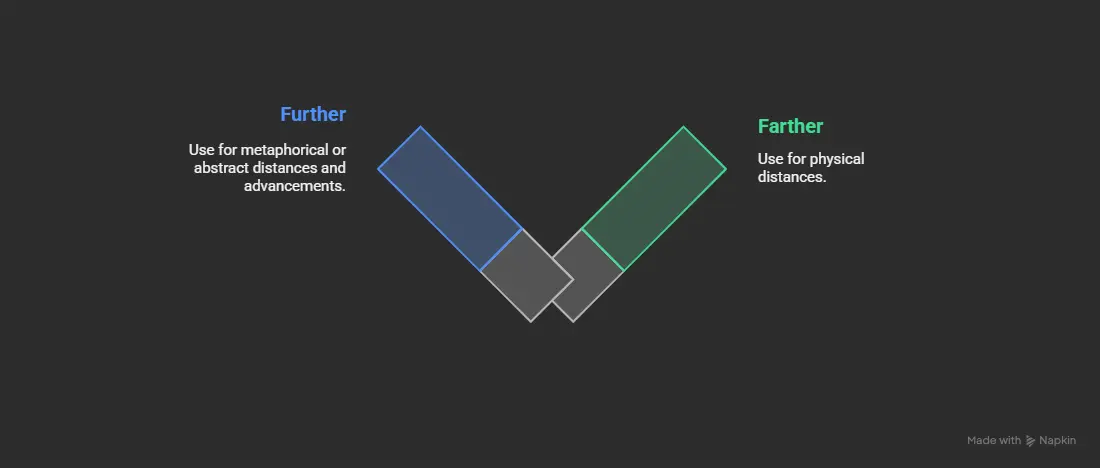
This guide aims to differentiate between both these words. It intends to put this matter to rest once & for all. It’s generally believed that we use further when referring to something abstract or figurative, while we use farther when actual distance is involved. The reality, however, isn’t that straightforward. There can be a lot of ambiguity when we look at it from different perspectives. The way these words have been historically used doesn’t make things easier either.
Why This Conundrum?
This debate primarily exists because both Further & Farther have been used interchangeably extensively. This baffles new users because they can find precedents against the outlined rules. They are left perplexed as to which usage is correct. They know well to follow the rule which states they should use Farther for physical & Further for a figurative distance. However, they still come across examples from literature and colloquial usage that go against this established rule.
People don’t always rely on the rules. They often go with what feels right or follow their gut feeling. This creates a problem in a linguistic sense because different things “feel right” to different individuals. The situation gets complicated still when new users trust incorrect colloquial or literary usage. This creates a cycle where people perpetuate this course of action. They use a word in a particular way because they saw someone use it that way.
When to use farther and further?
As a rule of thumb, it’s safe to use Farther whenever there is a physical distance involved & use Further whenever you’re referring to distance in a figurative or abstract sense. One should, however, keep the following perspectives in mind when using these words.
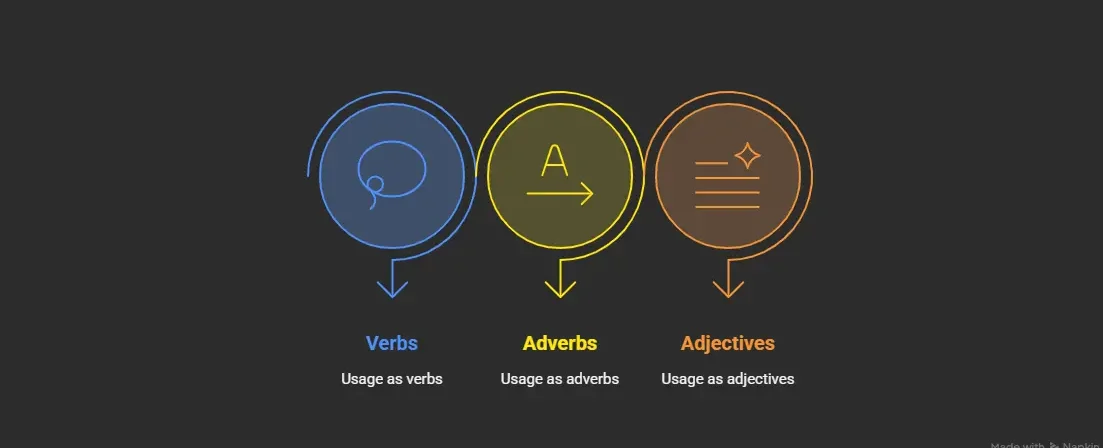
When Used as Verbs
You will almost invariably find yourself using Further in this case. One always tends to “Further his case” instead of being otherwise. Although Farther has been used historically in some instances, you can rest assured that it is no longer the case. You will never find yourself in a place where Farther even sounds right to you. So, it’s better to always use Farther when referring to it as a Verb within a sentence.
When Used as Adverbs
Further and Farther can be used as Adverbs within a sentence depending on context. One can be “humiliated Further,” as it is often said. One could also “drive Farther.” As evident from the usage, further is the appropriate word when referring to the concept of distance, while farther is suitable when discussing actual distance. Remembering this will help you choose carefully the next time.
When Used as Adjectives
Further means “additional” or “extra” when used as an Adjective. The rule of using Farther for physical distance also applies in this case. One can request “Further information”, for instance, & view the “Farther shore.” These examples clearly show that the rule is in place. Any usage other than the abovementioned will be imprecise. The individual must look for the right word in the right place.
Further vs Farther British English
In British English, the distinction between further vs farther uk is often less rigid than in American English. The general principle still applies. Farther typically used for physical distance. And farther used for metaphorical or figurative extent, degree, or progression. Further is more commonly used in British English for both senses, and farther is less frequent overall.
Further vs Farther Pronunciation
In American and British English, further and farther are pronounced similarly. But there are some difference in accents.
Further: /ˈfɜː(r)ðə(r)/ (British), /ˈfɝːðɚ/ (American)
Farther: /ˈfɑː(r)ðə(r)/ (British), /ˈfɑːrðɚ/ (American)
Further vs Farther Example
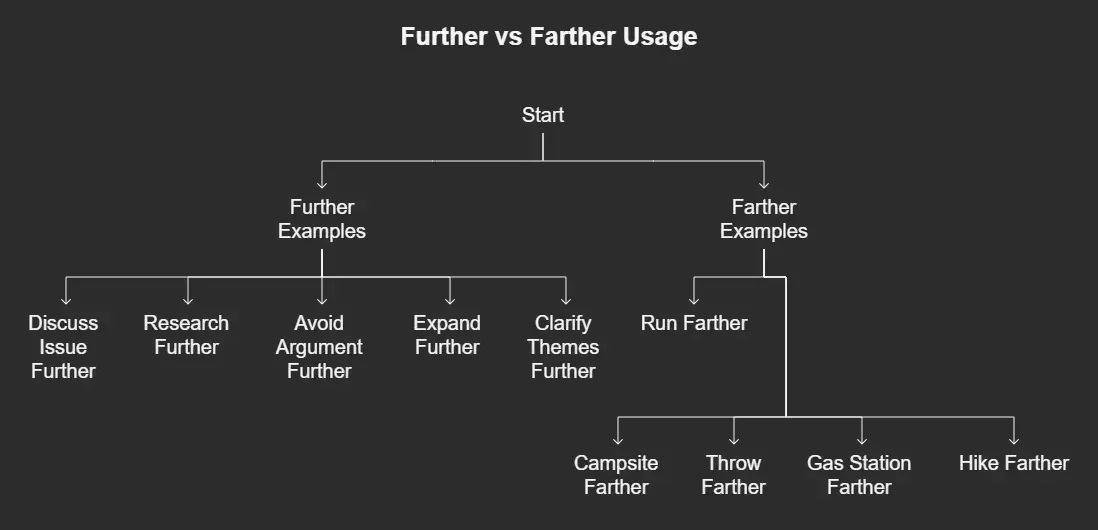
Examples for Further Vs Farther, to understand how to use them.
Further Examples
Farther Examples
Further vs Farther FAQs
Is it money goes farther or further?
Since we use further to refer to abstract ideas that aren’t physical in the stricter sense, the correct expression should be ‘money goes further.’
Do Americans say “further or farther”?
Most American English speakers use “farther” to describe physical distances. In contrast, they use “further” to mean figurative ones, like in abstract ideas.
Do you say look no further or look no farther?
The correct usage would be “look no further” because it refers to figurative speech & does not mean actual physical distance.
How do you use further in a sentence?
“Further” is used to refer to abstract ideas. It is often mistakenly used to refer to physical distance. The correct usage would be, “Don’t annoy me any further.”
Is using “farther” outdated?
While “farther” is often mistakenly confused with “further,” it is not outdated. “Farther” is used when physical distance is referred to.
Is “further ado” grammatically correct?
Yes. “Without further ado” is a grammatically correct idiom. It means without any further delay or without any more fuss.
Do you inquire further or farther?
The correct usage is to “inquire further.” We use “further” when there are no physical distances involved. We use “farther” when we mean distances.
What does goes much further mean?
“Goes much further” can refer to an abstract idea where no physical distance is involved. We can say, “Tom’s harsh behavior goes much further than mere words.”
What are common mistakes using “further”?
The most common mistake with using “further” is when it’s used to refer to physical distances. In that sense, its usage is wrong.
What does “far” mean?
“Far” means at or to a great distance, a long way off, at or to a remote point. It is usually used to refer to physical distance. For example, we had reached our destination far ahead.
Do you speak further or farther?
“Further” & “Farther” can be used according to the context of the sentence. We usually use “further” when referring to time or abstract ideas & “farther” when we mean distance.
Will vs shall difference?
Although interchangeable in modern usage, “Shall” is still more formal than “Will.” We use “Shall” when referring to the first person or showing intent.
Is it falling further or farther behind?
The phrase “falling further behind” is grammatically correct. We use it when someone lags behind in work, etc. We use “further” because there is no physical distance involved.
Is it farther my career or further my career?
The phrase “To further one’s career” is correct grammatically. It means to improve one’s career. We use “further” to refer to a concept instead of physical distance.
Are further and farther interchangeable?
No. “Further” & “Farther” are not interchangeable. We use “Further” to refer to some abstract concept or idea and “Farther” when we mean physical distances.
Is it further vs farther time?
Use further for time e.g., Pushed further into 2026. Farther is for physical distance, not time.
Is it further or farther from the truth?
The correct phrase is further from the truth. Further is used for abstract concepts like truth, while farther is reserved for physical distances.
Is it look no further or farther?
The correct phrase is look no further.
Is it money goes farther or further?
The correct phrase is money goes further.
Why do Americans say farther not further?
Americans say “farther” for physical distance and “further” for figurative or abstract distance, following a usage distinction promoted by U.S. style guides.
Is it farther my career or further my career?
The correct phrase is further my career.
Conclusion
Therefore, it can be concluded that even though we find examples from historical literature or colloquial usage which go against the established grammatical rule, it’s always better to stick to it. While some pundits may encourage you to use whichever word “sounds right to your ear,” know that different words may sound right to different people. It’s always better to be on the safe side & use a word according to the laid-out principles.